Crafts: We got the templates from a Baha'i Activity book, the kids coloured them and put them together themselves.
Sunday, August 12, 2012
Manifestations of God
Ages 7-8: The theme of these classes was basically God is One... one light, many lamps. we also sang the song, "Noah, Abraham, Krishna".
Crafts: We got the templates from a Baha'i Activity book, the kids coloured them and put them together themselves.
The circle craft rotates around through the various symbols of the religious, and matches them with the names of their Manifestation, and also matches up with what their followers are called.
The separately coloured and cut-out symbols are meant to be put together in a mobile, hung from a stick or a kind of hanger.
Sunday, January 16, 2011
Moderation & Service Project
This week one of our children chose MODERATION as our virtue to concentrate on. An interesting choice from a child, we thought, but hey, we can all use some learning about moderation!
STORY: Sarah told the story about how, in 1912, while members of the Baha'i Community were contributing funds towards the building of the Baha'i House of Worship in Wilmette, Illinois (the first and only Baha'i temple in North America at the moment), a woman made a rash decision in order to contribute money to this cause. She cut off her hair and sold it, then she gave the money to the temple fund. But when she told 'Abdu'l-Baha that this was what she had done, 'Abdu'l-Baha told her that, had he known that she was planning to do this in order to contribute to the temple, he would have told her not to do it.
This story comes from the early 20th century, when North American woman kept their hair long. Prior to 1913, women's hair was piled high atop the head and thickly padded. Notice the thick hair beneath the large hat in the picture. It was viewed by the culture (both men and women) as 'extreme' and completely unacceptable for a woman to cut her hair short. Of course this changed over the years, and so now we just need to understand the historical context of 'Abdu'l-Baha's comment. But the message of the story is still clear: moderation in all things.
The kids briefly discussed what needed moderation in their lives: watching TV, eating sweets, playing video games. They totally got it without much prompting.
MUSIC: Today, instead of learning a song about moderation (because we couldn't think of any!) we learned the musical term, "moderato" (moderate speed) and then compared it to the terms "presto" (fast) and "lento" (slow). We played rhythms with our hands, changing tempos between these three terms, depending on which one was shouted as a direction.
CRAFT: Our craft was to each create a picture of things in our lives that may require moderation - we ended up with pictures of all kinds of things anyway. The kids glued a candy onto the picture as a reminder of our discussion about moderation, and then we went outside for a service project.
SERVICE PROJECT: Today was a bit unusual in that there had been a lot of trash (hamburger wrappers, straws, cups etc) along the edge of the lawns on our side of the block. We decided to take the kids outside with tongs and a garbage bag and they had a ball finding trash and picking it up. We went down the block to the bus stop, and when we were done we looked up the street and saw how beautiful it looked once again with no trash littered along it. The kids had a lot of fun with this, it was a bit like a treasure hunt!
STORY: Sarah told the story about how, in 1912, while members of the Baha'i Community were contributing funds towards the building of the Baha'i House of Worship in Wilmette, Illinois (the first and only Baha'i temple in North America at the moment), a woman made a rash decision in order to contribute money to this cause. She cut off her hair and sold it, then she gave the money to the temple fund. But when she told 'Abdu'l-Baha that this was what she had done, 'Abdu'l-Baha told her that, had he known that she was planning to do this in order to contribute to the temple, he would have told her not to do it.

This story comes from the early 20th century, when North American woman kept their hair long. Prior to 1913, women's hair was piled high atop the head and thickly padded. Notice the thick hair beneath the large hat in the picture. It was viewed by the culture (both men and women) as 'extreme' and completely unacceptable for a woman to cut her hair short. Of course this changed over the years, and so now we just need to understand the historical context of 'Abdu'l-Baha's comment. But the message of the story is still clear: moderation in all things.
The kids briefly discussed what needed moderation in their lives: watching TV, eating sweets, playing video games. They totally got it without much prompting.
MUSIC: Today, instead of learning a song about moderation (because we couldn't think of any!) we learned the musical term, "moderato" (moderate speed) and then compared it to the terms "presto" (fast) and "lento" (slow). We played rhythms with our hands, changing tempos between these three terms, depending on which one was shouted as a direction.
CRAFT: Our craft was to each create a picture of things in our lives that may require moderation - we ended up with pictures of all kinds of things anyway. The kids glued a candy onto the picture as a reminder of our discussion about moderation, and then we went outside for a service project.
SERVICE PROJECT: Today was a bit unusual in that there had been a lot of trash (hamburger wrappers, straws, cups etc) along the edge of the lawns on our side of the block. We decided to take the kids outside with tongs and a garbage bag and they had a ball finding trash and picking it up. We went down the block to the bus stop, and when we were done we looked up the street and saw how beautiful it looked once again with no trash littered along it. The kids had a lot of fun with this, it was a bit like a treasure hunt!
Sunday, May 23, 2010
Taking a break for the summer
We have taken a break for the summer and will be starting up again in September - our classes are for 7-8 year olds. Weekly classes will be on Saturdays (exact time tba), and we hope that everyone will still be able to make it and to enjoy each other's company each week. We have also moved house, so please email me for our new address and phone number. Although this poster is from children's classes in New York City, it describes what all Baha'i Children's Classes are about. For more explanation, you can also go to the very first post on this blog.
Hope to see you all there,
Amy
Email: stephamy@gmail.com
www.bahai.org
Hope to see you all there,Amy
Email: stephamy@gmail.com
www.bahai.org
Sunday, February 7, 2010
Trustworthiness Feb. 7 - What Happened in Class?
Today we focused on the virtue of Trustworthiness.
We told a great story about a littl e boy who was in a class that was working on calligraphy, and 'Abdu'l-Baha was taking the time to look at all of the children's work every week. 'Abdu'l-Baha would comment on the work always in an encouraging way, praising the children, and offering any help if the children needed any. The little boy in the story created some beautiful calligraphy one week, and when he showed it to 'Abdu'l-Baha, 'Abdu'l-Baha saw how beautiful it was and he praised the little boy's work and wrote a comment on it (something like, "Excellent work!"). The boy was so proud and happy that 'Abdu'l-Baha had praised his work. The next week, however, the boy realized at the end of the week that he didn't have a good quality calligraphy done to show 'Abdu'l-Baha. So instead of showing him his real work for the week, the boy took the calligraphy that 'Abdu'l-Baha had already praised the week before, tore off the comment that 'Abdu'l-Baha had written, and showed exactly the same work to 'Abdu'l-Baha. When 'Abdu'l-Baha saw the work, he said kindly, "That work looks familiar," and handed the work back to the boy without any praise, without any written comment. The boy realized that he had lost 'Abdu'l-Baha's trust by trying to trick him, and after that he never tried doing something like that again.

The kids enjoyed the story, and understood the meaning of it. Then we read a storybook called "The Big, Fat, Enormous Lie" by Marjorie Weinmen Sharmat (Unicorn Paperback). The kids really liked the story.

Because we started class quite late today, we skipped the music went straight to the craft, which was making "fortune tellers" - those paper triangle-folded games that you ask questions and then the paper reveals an answer. A sort of "searching for truth" game, however we knew it wasn't a trustworthy source to ask!

The kids enjoyed the story, and understood the meaning of it. Then we read a storybook called "The Big, Fat, Enormous Lie" by Marjorie Weinmen Sharmat (Unicorn Paperback). The kids really liked the story.

Because we started class quite late today, we skipped the music went straight to the craft, which was making "fortune tellers" - those paper triangle-folded games that you ask questions and then the paper reveals an answer. A sort of "searching for truth" game, however we knew it wasn't a trustworthy source to ask!
Sunday, January 24, 2010
Truthfulness Reflection - What Happened in Class?
Today our virtue was Truthfulness.
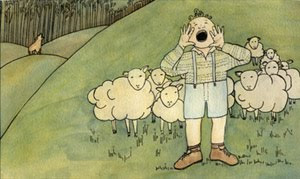
Story: We told the story of the Boy Who Cried Wolf, and it was told with extra emphasis (to keep it interesting!) as the kids shouted out "super silly sheep!" every time they were pointed to. This story is easily understood by kids and our kids were no exception. We introduced the quote from Baha'i Writings: "Truthfulness is the foundation of all human virtue." We discussed the meaning of the word "foundation", and then the meaning of "virtue", because understanding these words is key to really understanding the whole quote. The kids memorized this quote.
Music: We reviewed "Doh-Re-Mi" with the hand signs and added "Fa" and "Sol". We learned that "Doh" is the foundation of the music, and then sang the word "Truthfulness" as we signed "Doh". Then we added the words "hu-man vir-tues" on the notes "Mi" and "Re" and ended with the words "super silly sheep" (just because they are so fun to say!) on "Sol". We did this a few times until we had it learned vocally, and then transferred it onto instruments. We think it helped solidify remembering the quote, but definitely that would be reinforced much better by the craft.

Craft: We decided at the last minute to make sheep pictures - we drew a sheep outline onto a blank piece of paper for each kid, and then gave them cotton balls to glue onto the picture to make a wooly sheep. The kids added faces and landscapes etc to the pictures and they were lovely! At the bottom of the picture we wrote the quote about truthfulness, and the kids took the pictures home with them. Pictures of these sheep are forthcoming, as soon as I can figure out how to get the pics off of my phone (forgot the camera today!)
Story: We told the story of the Boy Who Cried Wolf, and it was told with extra emphasis (to keep it interesting!) as the kids shouted out "super silly sheep!" every time they were pointed to. This story is easily understood by kids and our kids were no exception. We introduced the quote from Baha'i Writings: "Truthfulness is the foundation of all human virtue." We discussed the meaning of the word "foundation", and then the meaning of "virtue", because understanding these words is key to really understanding the whole quote. The kids memorized this quote.
Music: We reviewed "Doh-Re-Mi" with the hand signs and added "Fa" and "Sol". We learned that "Doh" is the foundation of the music, and then sang the word "Truthfulness" as we signed "Doh". Then we added the words "hu-man vir-tues" on the notes "Mi" and "Re" and ended with the words "super silly sheep" (just because they are so fun to say!) on "Sol". We did this a few times until we had it learned vocally, and then transferred it onto instruments. We think it helped solidify remembering the quote, but definitely that would be reinforced much better by the craft.
Craft: We decided at the last minute to make sheep pictures - we drew a sheep outline onto a blank piece of paper for each kid, and then gave them cotton balls to glue onto the picture to make a wooly sheep. The kids added faces and landscapes etc to the pictures and they were lovely! At the bottom of the picture we wrote the quote about truthfulness, and the kids took the pictures home with them. Pictures of these sheep are forthcoming, as soon as I can figure out how to get the pics off of my phone (forgot the camera today!)
Friday, January 22, 2010
January 24th, 2010 ~ Truthfulness
This week our focus is on the virtue of Truthfulness.
Story: We will tell the story of "The Boy Who Cried Wolf" which really illustrates well for children the importance of truthfulness.
Music: We will sing "Truthfulness is the Foundation of all Human Virtues" while accompanying it rhythmically on the instruments and xylophone. Then we will continue with reading rhythms and learning solfege (Do-Re-Mi etc).
Craft: still tba
Story: We will tell the story of "The Boy Who Cried Wolf" which really illustrates well for children the importance of truthfulness.
Music: We will sing "Truthfulness is the Foundation of all Human Virtues" while accompanying it rhythmically on the instruments and xylophone. Then we will continue with reading rhythms and learning solfege (Do-Re-Mi etc).Craft: still tba
Sunday, January 17, 2010
January 17th, 2010 ~ Friendliness Reflection
What happened in class?
Story: Today we had five kids ages 5-7, and the theme of our class was Friendliness. We read a book to the kids called "I'm a Good Friend" by David Parker (Scholastic). We had a great discussion about friendliness as well as unfriendliness. We brought in a quote from the Baha'i Writings: "Blessed is he who mingleth with all men in a spirit of utmost kindliness and love." We discussed the meaning of "mingleth" just to be clear, and also we clarified that "men" refers to "humans" (not just men!).
Music: We learned the song "Hello World" by Red Grammer, and we learned the sign language for it as well. Then we made a rain storm on hand drums, using dynamics.
Craft: We made friendship bracelets out of beads and pipe cleaners and planned to give them to a friend.
Story: Today we had five kids ages 5-7, and the theme of our class was Friendliness. We read a book to the kids called "I'm a Good Friend" by David Parker (Scholastic). We had a great discussion about friendliness as well as unfriendliness. We brought in a quote from the Baha'i Writings: "Blessed is he who mingleth with all men in a spirit of utmost kindliness and love." We discussed the meaning of "mingleth" just to be clear, and also we clarified that "men" refers to "humans" (not just men!).
Music: We learned the song "Hello World" by Red Grammer, and we learned the sign language for it as well. Then we made a rain storm on hand drums, using dynamics.Craft: We made friendship bracelets out of beads and pipe cleaners and planned to give them to a friend.
Sunday, January 10, 2010
No Class January 10th, 2010
Hi everyone, sorry that there will be no class today as teachers are both unable to be there! So hope to see you next week,
:) Amy & Sarah
:) Amy & Sarah
Sunday, January 3, 2010
Generosity Reflection : What happened in class?
We had four kids today, and the lesson on generosity was easy to connect throughout all of our sections of the class.

Story: The story was fun to hear, as the kids all had comments about the felt sheep that were being used to help tell the story! Some were missing eyes and were a bit ragged around the edges, but when the sheep were distributed amongst everyone in class the point was pretty solidly made.

Music: We carefully reviewed speaking the rhythm cards before playing them, and then transferred them to instruments. The kids should be looking at the rhythm cards while playing their instruments - thus reading the music as they play. Even though they already know how the rhythm goes, seeing it while they play it correctly reinforces their knowledge of the components of notation. We also started learning pitch with Kodaly hand signs for Do, Re and Mi and talked about which notes sound higher or lower. We sang the song "Love is something if you give it away" and talked a bit about how you end up having more love if you give love away. The kids totally got it and said some insightful things.
Craft: Actually today was baking, and we made oatmeal cookies with chocolate chips on top. The kids took turns stirring or adding ingredients, and then each of them had their own tray to put their cookies on. While waiting for the cookies to bake, we decorated boxes for the cookies, and the kids decided to whom they would give their cookies - giving the cookies away is our practicing generosity.
Story: The story was fun to hear, as the kids all had comments about the felt sheep that were being used to help tell the story! Some were missing eyes and were a bit ragged around the edges, but when the sheep were distributed amongst everyone in class the point was pretty solidly made.
Music: We carefully reviewed speaking the rhythm cards before playing them, and then transferred them to instruments. The kids should be looking at the rhythm cards while playing their instruments - thus reading the music as they play. Even though they already know how the rhythm goes, seeing it while they play it correctly reinforces their knowledge of the components of notation. We also started learning pitch with Kodaly hand signs for Do, Re and Mi and talked about which notes sound higher or lower. We sang the song "Love is something if you give it away" and talked a bit about how you end up having more love if you give love away. The kids totally got it and said some insightful things.
Craft: Actually today was baking, and we made oatmeal cookies with chocolate chips on top. The kids took turns stirring or adding ingredients, and then each of them had their own tray to put their cookies on. While waiting for the cookies to bake, we decorated boxes for the cookies, and the kids decided to whom they would give their cookies - giving the cookies away is our practicing generosity.
Saturday, January 2, 2010
January 3rd, 2009 ~ Generosity
This week we will focus on the virtue of Generosity.
Story: We will tell the story of 'Abdu'l-Baha (as a young boy) going out to inspect his father's flock of sheep. When the man who is accompanying him tells him that they cannot leave the shepherds without giving them a gift (as his father always did), 'Abdu'l-Baha thinks carefully, because he has brought nothing to give them, and then he decides to give the shepherds the sheep as a gift. His father, Baha'u'llah, was pleased with this, even though 'Abdu'l-Baha had given away their sheep. 'Abdu'l-Baha showed great generosity towards the shepherds, and he continued to show great generosity for the rest of his life. Generosity does not always mean giving 'something', it can mean spending time with someone, making food for someone, sharing toys with someone, or just giving love. It can mean many things and we will talk with the kids about this.
Music: We will sing the song "Love is something if you give it away" (an old favourite!). Since it has been a few weeks since our last class, we'll review our rhythm cards and begin to talk about
pitch.
Craft: We'll bake and decorate cookies to take home and give away. A way to practice generosity!
Story: We will tell the story of 'Abdu'l-Baha (as a young boy) going out to inspect his father's flock of sheep. When the man who is accompanying him tells him that they cannot leave the shepherds without giving them a gift (as his father always did), 'Abdu'l-Baha thinks carefully, because he has brought nothing to give them, and then he decides to give the shepherds the sheep as a gift. His father, Baha'u'llah, was pleased with this, even though 'Abdu'l-Baha had given away their sheep. 'Abdu'l-Baha showed great generosity towards the shepherds, and he continued to show great generosity for the rest of his life. Generosity does not always mean giving 'something', it can mean spending time with someone, making food for someone, sharing toys with someone, or just giving love. It can mean many things and we will talk with the kids about this.Music: We will sing the song "Love is something if you give it away" (an old favourite!). Since it has been a few weeks since our last class, we'll review our rhythm cards and begin to talk about
pitch.
Craft: We'll bake and decorate cookies to take home and give away. A way to practice generosity!
Sunday, December 20, 2009
Next Children's Class January 3rd, 2010
Because of the holidays, our next class will be Sunday January 3rd at 1:30.
Patience Reflection - what happened in class?
Today the kids actually started by playing a game of Ruk Shuk, a building game with rocks that takes patience to play. Then we went into our story...
Story: We told the story of 'Abdu'l-Baha's 23-year patience with a man who hated him. It was a beautiful story to hear, how 'Abdu'l-Baha bought food for the man and paid for a doctor. The kids totally got that 'Abdu'l-Baha was patient for those 23 years.

Music: We put two rhythm cards together and played complex rhythms, individually and as a group on various instruments.
Craft: We did beading, because that takes PATIENCE!!
Story: We told the story of 'Abdu'l-Baha's 23-year patience with a man who hated him. It was a beautiful story to hear, how 'Abdu'l-Baha bought food for the man and paid for a doctor. The kids totally got that 'Abdu'l-Baha was patient for those 23 years.
Music: We put two rhythm cards together and played complex rhythms, individually and as a group on various instruments.
Patience - December 20th, 2009
Oops, I forgot to post this lesson plan until today! Sorry about that. Today we will be focusing on the virute of Patience. Seeing that the kids are all revved up for Christmas, it seemed fitting to talk a little bit about the hardest part of the season - being patient.
Story: Today we will hear a story about how 'Abdu'l-Baha was patient for 23 years! There was a man who really hated 'Abdu'l-Baha because of his religion, but 'Abdu'l-Baha was always very kind to him, and even took care of him when he was sick. After 23 years the man finally realized that 'Abdu'l-Baha had been kind and patient with him despite all of his hatred, and that man was transformed and became grateful for all of the kindness 'Abdu'l-Baha had shown him.
Music: We will focus on reading the rhythm flashcards, and try putting two cards together today, to join patterns.
Craft: Today instead of a craft we will play games (Jack Straws, where you pick up objects from a scrambled pile, and Ruk-Shuk, a game of rock balancing) that require some patience to play. Of course, the craft stuff will be out on the table and the kids will be welcome to draw, colour, do stickers, and make whatever they like.
Story: Today we will hear a story about how 'Abdu'l-Baha was patient for 23 years! There was a man who really hated 'Abdu'l-Baha because of his religion, but 'Abdu'l-Baha was always very kind to him, and even took care of him when he was sick. After 23 years the man finally realized that 'Abdu'l-Baha had been kind and patient with him despite all of his hatred, and that man was transformed and became grateful for all of the kindness 'Abdu'l-Baha had shown him.
Music: We will focus on reading the rhythm flashcards, and try putting two cards together today, to join patterns.
Craft: Today instead of a craft we will play games (Jack Straws, where you pick up objects from a scrambled pile, and Ruk-Shuk, a game of rock balancing) that require some patience to play. Of course, the craft stuff will be out on the table and the kids will be welcome to draw, colour, do stickers, and make whatever they like.
Sunday, December 13, 2009
Justice Reflection - what happened in class?
We had three kids altogether today - well, three 6 year-olds plus a little sister and a big brother!
Story: the story of 'Abdu'l-Baha and the carriage when very well. When discussing the story, the kids understood the concept... they understood that 'Abdu'l-Baha had sacrificed his own comfort so that he would have money to help the needy. However, if I did this again with 6-year-olds I would not bring up the subject of Christmas presents. When I asked the kids if they thought there were some kids who wouldn't receive many presents for Christmas because they were poor, the kids immediately answered, "maybe they've been naughty!" And so the Santa Claus myth doesn't help much with the concept of justice at Christmas I found out. We had to sort that out before we could go on. As one of the parents commented, "We should have stuck with food (rather than presents!)". And I agreed. So next time I would use the idea of 'not enough food' as opposed to 'not enough presents'! Live and learn!
Music: We were all reading four-beat rhythm cards quite successfully, saying the rhythms first, then saying and playing them, and then just playing them on percussion instruments. We passed the instruments around so that everyone could have a chance to play each one.
Craft: We made masks, because my child was on all week about the Justice League (Batman etc - his personal reference to Justice) so the masks were made of foam and individualized with stamps and glitter.
After the class, I went over the concept of Justice with my own child (I wanted to make sure he understood about the presents!) and he decided we should buy a new toy for a little boy and take it to the Empty Stocking Fund or some place where they will distribute presents to the needy at Christmas time. So I know he got the concept, but I was glad I reinforced it afterwards.
Story: the story of 'Abdu'l-Baha and the carriage when very well. When discussing the story, the kids understood the concept... they understood that 'Abdu'l-Baha had sacrificed his own comfort so that he would have money to help the needy. However, if I did this again with 6-year-olds I would not bring up the subject of Christmas presents. When I asked the kids if they thought there were some kids who wouldn't receive many presents for Christmas because they were poor, the kids immediately answered, "maybe they've been naughty!" And so the Santa Claus myth doesn't help much with the concept of justice at Christmas I found out. We had to sort that out before we could go on. As one of the parents commented, "We should have stuck with food (rather than presents!)". And I agreed. So next time I would use the idea of 'not enough food' as opposed to 'not enough presents'! Live and learn!
Music: We were all reading four-beat rhythm cards quite successfully, saying the rhythms first, then saying and playing them, and then just playing them on percussion instruments. We passed the instruments around so that everyone could have a chance to play each one.
Craft: We made masks, because my child was on all week about the Justice League (Batman etc - his personal reference to Justice) so the masks were made of foam and individualized with stamps and glitter.
After the class, I went over the concept of Justice with my own child (I wanted to make sure he understood about the presents!) and he decided we should buy a new toy for a little boy and take it to the Empty Stocking Fund or some place where they will distribute presents to the needy at Christmas time. So I know he got the concept, but I was glad I reinforced it afterwards.
Saturday, December 12, 2009
Justice ~ December 13, 2009
This week the virture we will focus on is Justice.
Story: 'Abdu'l-Baha and the carriage ride. In this story, a driver waits for 'Abdu'l-Baha in an expensive carriage, thinking that he will want to ride "in style". Instead, 'Abdu'l-Baha climbs into a plain carriage where others are sharing the ride. The driver says to him, "Wouldn't you rather ride by yourself in a nice carriage?" but 'Abdu'l-Baha replies, "why would I ride in that fancy carriage while others have to ride in a plain carriage?" The driver shrugs and drives the plain carriage with all its passengers on to its destination. At the end of the ride, when 'Abdu'l-Baha gets off the carriage, an old fisherwoman comes to him and tells him that she has been fishing all day but has caught nothing, and now she has nothing with which to feed her family. 'Abdu'l-Baha gives her some money to buy food, and tells the driver that without the money he saved on the carriage ride, he would have had nothing to give to this needy woman.
Justice is about more than being fair - it is about making sure that everyone has what they need. We will do some role-play after the story that helps the kids understand this concept in a concrete way.
Music: We will continue with reading rhythms and transferring them to instruments.
Craft: Foam masks
Story: 'Abdu'l-Baha and the carriage ride. In this story, a driver waits for 'Abdu'l-Baha in an expensive carriage, thinking that he will want to ride "in style". Instead, 'Abdu'l-Baha climbs into a plain carriage where others are sharing the ride. The driver says to him, "Wouldn't you rather ride by yourself in a nice carriage?" but 'Abdu'l-Baha replies, "why would I ride in that fancy carriage while others have to ride in a plain carriage?" The driver shrugs and drives the plain carriage with all its passengers on to its destination. At the end of the ride, when 'Abdu'l-Baha gets off the carriage, an old fisherwoman comes to him and tells him that she has been fishing all day but has caught nothing, and now she has nothing with which to feed her family. 'Abdu'l-Baha gives her some money to buy food, and tells the driver that without the money he saved on the carriage ride, he would have had nothing to give to this needy woman.
Justice is about more than being fair - it is about making sure that everyone has what they need. We will do some role-play after the story that helps the kids understand this concept in a concrete way.
Music: We will continue with reading rhythms and transferring them to instruments.
Craft: Foam masks
Sunday, December 6, 2009
Kindness Reflection - what happened in class?
Today we had three kids, and the theme was Kindness to Animals. We began with the prayer 'Blessed is the Spot', which we first sang with the actions, and then we just did the actions with no singing.
Story: We told the story of St. Francis of Assisi taming the 'wolf of Gubbio' by being gentle, feeding it and taking care of it. We learned that the story is a legend, around 800 years old, and that although we know that St. Francis was a real person, and that he was known for being gentle, we don't know for sure if the stories about him (like the wolf of Gubbio) are all true. But the example of kindness to the wolf in the story kicked off our class on kindness to animals.
Music: We learned the song "If an animal be sick" by Joe Crone (words from the Baha'i Writings), and sang it over a few times. Then we each chose an animal and invented our own line, and it became a chant that ended up like this:
Listen to the snake: hiss hiss hiss
Listen to the cat: meow meow meow!
Listen to the T-Rex: roar roar roar!
Listen to the wolf: owwwwwwwwwww!
Listen to the humming bird: hummmmmmmmmm
We each said our own part of the chant, keeping us in rhythm together. Then we chose instruments that we thought sounded like our animals and transferred the rhythm to those. We had snake on a shaker, cat on xylophone bells, T-rex on a djembe drum, wolf on finger cymbals, and humming bird on a guiro. We played the whole chant several times through without words, and kept together on the rhythm.
Then we read more ta, tee-tee and quarter-rest rhythm flashcards, first saying them, and then playing them on hand drums as we read the notes. Everyone seemed to pick it up very well, and we'll continue with the rhythm reading for a while until everyone can read their own rhythms and play them on a drum.
Craft: We folded regular paper into four parts, and pasted the four parts of the quote about being kind to animals onto the four sections. Here are some more photos of what the kids created:
Friday, December 4, 2009
Kindness - December 6th, 2009
The virtue for this week is KINDNESS.
Specifically, we will talk about kindness to animals.
Story: The Tale of St. Francis
Music: Rhythm Chant with instruments built on animal names and sounds
Song: If An Animal Be Sick (by Joe Crone)
Specifically, we will talk about kindness to animals.
Story: The Tale of St. Francis
Music: Rhythm Chant with instruments built on animal names and soundsSong: If An Animal Be Sick (by Joe Crone)
"If an animal be sick let the children try to heal it,
If it be hungry let them feed it,
If thirsty let them quench its thirst,
If weary let them see that it rests."
(from the Baha'i Writings)
Craft: foamy animal cartoons illustrating animals that are hungry, thirsty, sick, and weary, with self-portraits of being kind to these animals.
Sunday, November 29, 2009
Helpfulness Reflection - what happened in class?
Today we had four kids attending, and we started with a prayer: 'Blessed is the Spot' with actions. It helped to focus us into a frame of mind where we could quietly listen to the story.
Story: We told the story of the Lion and the Mouse using two stuffies, and the kids were really attentive and engaged. They guessed that the virtue for the week was helpfulness. The kids then offered stories about when they had been helpful, and when others had helped them.

Music: We learned the Lion and the Mouse chant, and parents stayed to help us out. We had four different lines going at the same time, and then we transferred them to instruments. We took away the words, and taa-daa! We had an orchestra playing four parts! It was lots of fun.
Then we learned how to read music rhythms: ta (quarter note), tee-tee (eighth notes) and a quarter rest. We went through 10 flashcards with the kids each pointing and reading the rhythms. Learning to read music will be a part of every class.
Craft: We made lion and mouse masks, so that the kids could act out the story. They looked awesome!
Story: We told the story of the Lion and the Mouse using two stuffies, and the kids were really attentive and engaged. They guessed that the virtue for the week was helpfulness. The kids then offered stories about when they had been helpful, and when others had helped them.

Music: We learned the Lion and the Mouse chant, and parents stayed to help us out. We had four different lines going at the same time, and then we transferred them to instruments. We took away the words, and taa-daa! We had an orchestra playing four parts! It was lots of fun.
Then we learned how to read music rhythms: ta (quarter note), tee-tee (eighth notes) and a quarter rest. We went through 10 flashcards with the kids each pointing and reading the rhythms. Learning to read music will be a part of every class.
Craft: We made lion and mouse masks, so that the kids could act out the story. They looked awesome!
Saturday, November 28, 2009
Helpfulness - November 29th, 2009
The virtue for this week is HELPFULNESS. Here's the basic plan:
Story: The Lion and the Mouse (from Aesop's Fables)
Music: The Lion and the Mouse (Orff version) on drums, xylophone, bells & tambourine
Hea-vy li-on's paw - smash! (tee tee tee tee tah tah)
Squea-ky lit-tle mouse - squeak! (tee tee tee tee tah)
Chew chew chew chew chew - Aaah! (tee tee tee tee tah)
You helped me - now I'm free! (tah tah tah rest - tah tah tah rest)
Craft: lion and mouse masks, act out the story at home!
Story: The Lion and the Mouse (from Aesop's Fables)
Music: The Lion and the Mouse (Orff version) on drums, xylophone, bells & tambourine
Hea-vy li-on's paw - smash! (tee tee tee tee tah tah)
Squea-ky lit-tle mouse - squeak! (tee tee tee tee tah)
Chew chew chew chew chew - Aaah! (tee tee tee tee tah)
You helped me - now I'm free! (tah tah tah rest - tah tah tah rest)
Craft: lion and mouse masks, act out the story at home!
Monday, November 23, 2009
Welcome to Soul Friends!
Soul Friends is the name of a Baha'i Children's Class - focusing on a virtue every week - that we are starting at our house. We are Baha'is, and my son said to me just last week, "Mom, can't we have another children's class like the one we had at our old house?" (we used to live in North Van).

We offer children's classes because we believe children are the most precious treasure a community can possess, for in them are the promise and guarantee of the future. They bear the seeds of the character of future society which is largely shaped by what the adults constituting the community do or fail to do with respect to children. We would like this class to be a safe place where kids can come together and learn about virtues and universal spiritual values in a safe environment, through fun activities and interaction.
Singing and acting out Five Green and Speckled Frogs
(we'll be playing instruments and learning about music as well)
We will choose a virtue for the week and focus on it, drawing on sources that illustrate the virtue being focused on. For example, in a class on "truthfulness" a great story for the kids to hear and even act out in a drama of their own is "The Boy Who Cried Wolf". However, in a class on love or forgiveness it is appropriate to use a story about something that Jesus, the Buddha or 'Abdu'l-Baha did in their lives. There is no room in a Baha'i children's class for theology or dogma - virtues are universal and as children learn about them they develop their spiritual faculties and lay the foundations of a noble and upright character.
These classes don't cost anything, they are meant to build community and bonds between children and families of all backgrounds and help strengthen the roots of Faith in society. If any parent would like to help out with the classes at any time, you are most welcome. All parents are welcome to stay for the class or drop off their child. If you don't find out what you want to know from this blog, please give me a call on the good, old-fashioned phone or talk to me if you see me at the school.

The old gang with a take-home craft...
Baha'i children's class at our old house
Singing and acting out Five Green and Speckled Frogs(we'll be playing instruments and learning about music as well)
These classes don't cost anything, they are meant to build community and bonds between children and families of all backgrounds and help strengthen the roots of Faith in society. If any parent would like to help out with the classes at any time, you are most welcome. All parents are welcome to stay for the class or drop off their child. If you don't find out what you want to know from this blog, please give me a call on the good, old-fashioned phone or talk to me if you see me at the school.
Here is a video of a Baha'i prayer called "Blessed Is the Spot" that I taught the kids (along with some actions) at a Baha'i Children's Class in Surrey.
"Blessed is the spot, and the house, and the place, and the city, and the heart, and the mountain, and the refuge, and the cave, and the valley, and the land, and the sea, and the island,
and the meadow where mention of God hath been made
and His praise glorified." ~ Baha'u'llah
and the meadow where mention of God hath been made
and His praise glorified." ~ Baha'u'llah
Subscribe to:
Posts (Atom)